The Premier Resource for Resolving Social Anxiety Disorder
Self Help Books
Clinical Interviews

and more…
Self Help Programs
The Key to Understanding
Social Anxiety Treatment
15 minutes to change your life
An Introduction from Jonathan Berent
While there are numerous manifestations of social anxiety, including performance anxiety, fear of public speaking, selective mutism, erythrophobia (fear of blushing), hyperhidrosis, fear of being noticeably nervous, school phobia, dependent personality, and pervasive social avoidance, there are two basic types of individuals who have the problem: These are people with “initiative” and those without “initiative”. Initiative does not mean ability. It means the motivation to start up or motivation to get help. When an individual of any age does not have initiative, treatment begins with parents, given the avoidance-dependence dynamic.
The dynamic that distinguishes social anxiety from other anxiety disorders is the element of performance. That said, social anxiety is commonly co-morbid with other anxiety symptomatology; especially Obsessive-Compulsive Personality Disorder, which includes perfectionism and Obsessive-Compulsive Disorder.
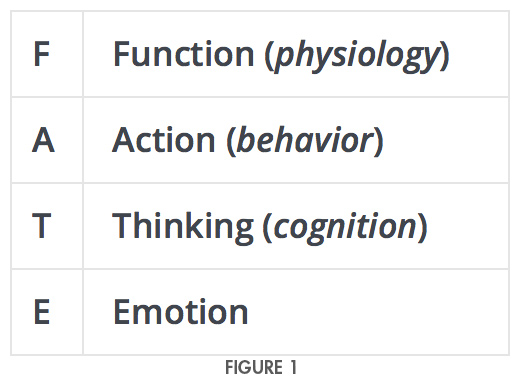 Jonathan’s book Beyond Shyness: How to Conquer Social Anxieties (Simon & Schuster) was so named because “shyness” is too abstract and nonfunctional a term. The reality is that shyness is social anxiety. The question is, to what degree is it present? To really understand the phenomenon, it is important to understand its components. Think of F.A.T.E. (See Figure 1).
Any treatment modality that does not integrate this architecture is, in essence, trivializing the problem.
The biggest confusion that people experience when starting treatment is understanding how ingrained the problem can become. That’s the reason intervention as early as possible will facilitate high performance treatment.
Each individual has their own learning curve. The primary variables for this include length of the problem, severity of the problem, motivation, expressive ability, ability to integrate new concepts, readiness to face fear, and degree of obsessive worry and panic.
Think you may have social anxiety?

Modern technology and a perfectionist culture may increase the risk
We all need moments of solitude, but people are primarily social creatures. Connecting with others gives us a sense of meaning and purpose, and helps us make our way in the world.
That is why social anxiety can be so devastating—it injures our ability to connect. Read More
Social Anxiety
Jonathan Berent L.C.S.W. Presents Public Speaking Anxiety Workshop to The National Association of Social Workers
Psycho-physiological Therapy for Public Speaking Anxiety & Fear of Being Noticeably Nervous Public speaking anxiety is the #1 phobia which is often driven by the fear of being noticeably nervous.... Read more
Jonathan Berent Announces First of Its Kind Library of Clinical Interviews on Public Speaking and Fear of Being Noticeably Nervous
Millions Experience Public Speaking Anxiety In the Form of Erythrophobia, Hyper-hidrosis and Voice Paralysis Jonathan Berent, L.C.S.W., pioneering therapist and author, offers a new and continually gr... Read more
Introspection as a key to resolution of social anxiety
Since 1978 The Berent Treatment Method has adapted therapy to the specific needs of social anxiety sufferers rather than try to fit the disorder into the narrow confines of an existing treatment modal... Read more
From Performance Anxiety & Selective Mutism to School Shootings & Suicide
The Perfect Storm of Anxiety Builds Momentum in the Educational System Although anxiety disorders are the most common mental illnesses in the United States most suffers do not receive help. This is be... Read more

The most evidence based clinical success for social anxiety since 1978.
Treatment Available Worldwide
AskJonathan
Read a collection of questions shared by our readership community about a wide variety of aspects of social anxiety

Jonathan Berent,
L.C.S.W., A.C.S.W
Jonathan Berent, L.C.S.W., A.C.S.W., is a psychotherapist who has been practicing since 1978. He has created the Berent Treatment Method for Social Anxiety, which is the result of his clinical work with thousands of individuals of all ages with social anxiety since 1978. He is the author of Work Makes Me Nervous: Overcome Anxiety and Build the Confidence to Succeed (Wiley, 2010), Beyond Shyness: How to Conquer Social Anxieties (Simon & Schuster, 1992), and Social Anxiety: The Untold Story, which is an accredited course for mental health professionals in using the Berent Method to treat social anxiety. (Andrew Kukes Foundation, 2011).
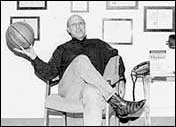 Socialanxiety.com, has served millions of unique visitors as a multimedia clearinghouse for patients, parents, and fellow mental health professionals in search of articles, educational materials, and books on social anxiety and related subjects. His library of clinical interviews appears to be the most documented clinical success with social anxiety.
NEW PODCAST:
Public Speaking Anxiety & Fear of Being Noticeably Nervous: Mind Surgery for High Performers